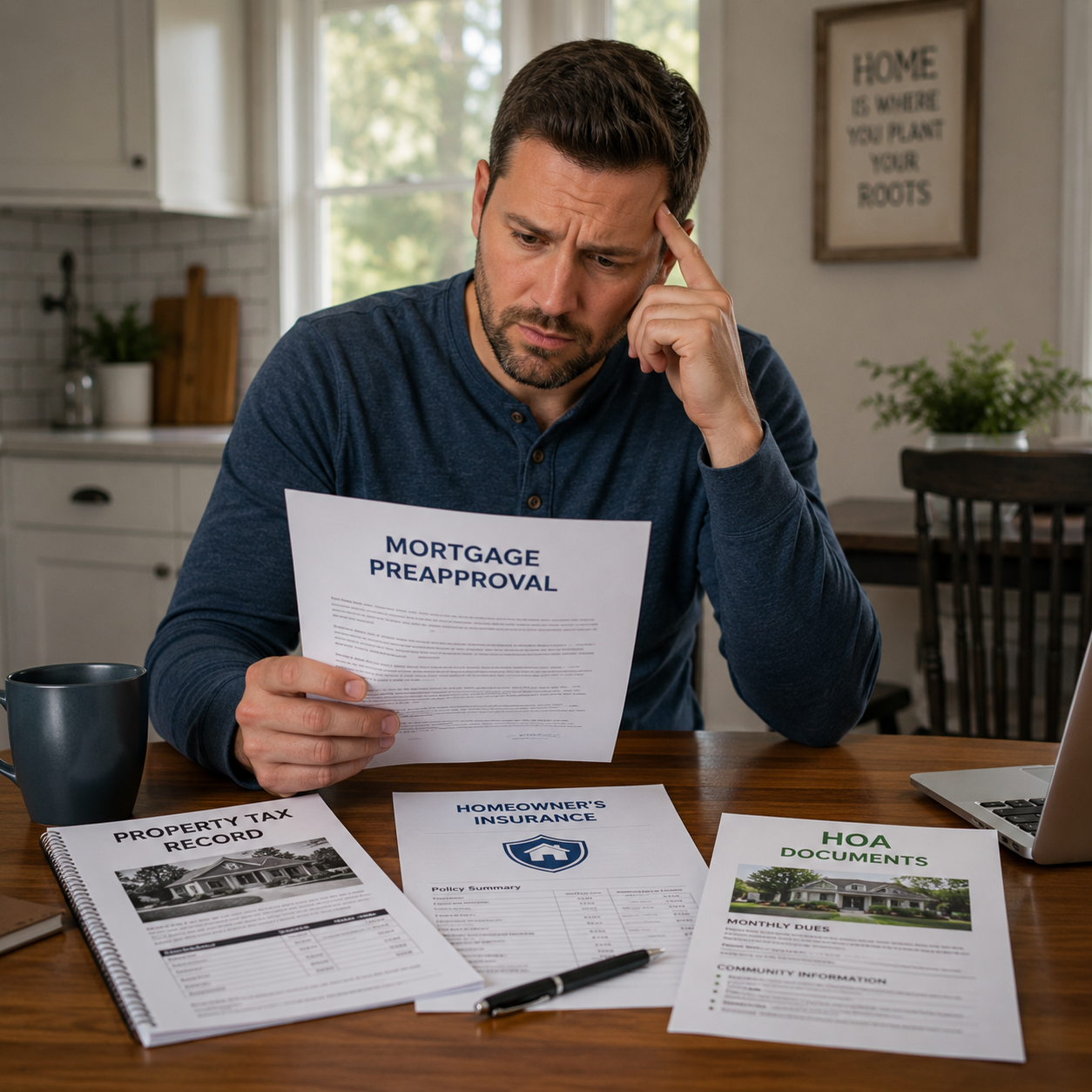
Can You Trust Your Mortgage Preapproval When You're Out Shopping for Homes? Quick Summary: A…
8 First-Time Homebuyer Mistakes and How to Avoid Them
Quick Summary: The most expensive first-time homebuyer mistakes happen before closing. Buyers shop without a preapproval, set a budget from the approval amount, change their finances mid-loan, compare lenders by rate alone, and treat the appraisal like an inspection. You can avoid each one with a plan you make before you tour homes.
Most of the problems I see with first-time buyers don’t come from the house. They come from decisions made in the weeks before you make an offer and the weeks before closing. Here are the eight that cost buyers the most money and stress, and what to do instead.
1. Shopping for Homes Before You Are Preapproved
Get a full preapproval before you tour homes. A preapproval means a lender has pulled your credit and reviewed your income and asset documents, such as pay stubs, W-2s, and bank statements. That review catches problems while you still have time to fix them. It also gives you a price range you can rely on.
Without a preapproval, you might fall in love with a home you can’t finance. Sellers and listing agents also take your offer less seriously. Not every preapproval carries the same weight, so read how to tell if your mortgage preapproval will hold up.
When you are ready, you can apply for your preapproval online.
If you won’t be shopping for six months or longer and just want to know where you stand, a prequalification is enough for now. A preapproval relies on a credit report and documents that expire within a few months, so getting one too early means you’ll have to do it again. You can start a prequalification online and move to a full preapproval when you get closer to buying.
2. Setting Your Budget by the Approval Amount
Your approval amount is the most a lender will allow under its debt-to-income guidelines. It is not the payment that fits your life. Lenders don’t count child care, commuting, retirement savings, or emergency savings.
Start with a monthly payment you are comfortable with, then work backward to a price. Your payment includes:
- Principal and interest
- Property taxes
- Homeowners insurance
- Mortgage insurance, if your loan requires it
- HOA dues, if the home has them
After that, add utilities and a maintenance fund. This step-by-step budget for buying a home walks through the numbers.
3. Assuming You Can’t Buy Yet
Many buyers wait years longer than they need to. They think they need a large down payment, or that owning a home years ago disqualifies them from first-time buyer programs.
Several loan programs allow a much smaller down payment than most people expect. VA loans may not require a down payment for eligible Veterans and service members. If you served, read how VA home loans work and who qualifies before you decide how much to save.
You may also count as a first-time buyer even if you owned before. Fannie Mae and HUD generally treat you as one if you haven’t owned a principal residence in the past three years.
4. Changing Your Finances During the Loan
Keep your finances steady from application to closing. Lenders often recheck your credit and verify your job again right before closing. A late change can delay or end the loan.
Until you have the keys, avoid these:
- Opening new credit cards or financing furniture or a vehicle
- Changing jobs or switching from salary to commission
- Cosigning a loan for anyone
- Making large cash deposits you can’t document with a paper trail
As a former paramedic and firefighter, I know how much first responders rely on overtime and shift pay. Lenders usually need a documented history of that income before they can count it. Talk to your loan officer before you change shifts, stations, or departments.
5. Comparing Lenders by Interest Rate Alone
Compare the full cost of each loan, not just the rate. A low rate can come with discount points or higher lender fees. Within three business days of your application, every lender must give you a standardized Loan Estimate, so you can line up offers side by side.
On each Loan Estimate, look at:
- Origination charges
- Points
- The APR
- Estimated cash to close
The Consumer Financial Protection Bureau has a guide to reading your Loan Estimate. Shopping more than one lender usually has little effect on your credit. Scoring models generally count several mortgage credit checks within a short window as a single inquiry.
6. Treating the Appraisal Like a Home Inspection
An appraisal and a home inspection do different jobs. The appraisal estimates the home’s value for the lender and checks basic property requirements. A home inspection is a detailed review of the home’s condition for you, the buyer.
Appraisers don’t test the furnace, crawl the attic, or run every faucet. FHA buyers sign a form that explains this difference. A VA appraisal checks the home against VA’s Minimum Property Requirements, but it is not a full inspection. VA purchases in Indiana and Illinois require a wood-destroying insect inspection. That inspection still doesn’t replace a general home inspection.
Waiving the inspection can strengthen an offer, but you take on the repair risk. Make that choice knowing what you are giving up.
7. Estimating Property Taxes From the Seller’s Bill
Don’t build your payment on the seller’s tax bill. In Indiana and Illinois, property taxes are paid a year behind. The seller’s bill may also include deductions that end when the house sells, such as the homestead deduction.
Your escrow payment can increase once your assessment and deductions apply. Ask your lender to estimate taxes at the right level. Then confirm with your title company or the county auditor that your homestead deduction gets filed. These 2026 Indiana property tax changes also affect what new owners pay.
8. Draining Your Savings to Close
Plan to have money left after closing. Cash to close includes any down payment, closing costs, and prepaid items. Prepaids include the first year of homeowners insurance and the starting balance of your escrow account.
New owners also pay for moving, utility deposits, and the first unexpected repair. Some loan programs require reserves, savings left over after closing. Seller credits can help with costs, but seller contribution rules vary by loan program. Ask early how much cash your loan will actually need.
Talk Through Your Plan Before You Shop
Fifteen minutes before you start looking can save you months of frustration later. Call 219-695-0369 or text me at 219-758-8072. You can also book a time on my calendar.
Frequently Asked Questions
Do I count as a first-time homebuyer if I owned a home before?
Often, yes. Fannie Mae and HUD generally treat you as a first-time homebuyer if you have not owned a principal residence in the past three years. Specific programs can use their own definitions, so confirm with your lender.
Should I get preapproved before I look at homes?
Yes. A preapproval shows you a realistic price range, catches credit or income issues early, and tells sellers a lender has already reviewed your file.
Will talking to more than one lender hurt my credit score?
Usually very little. Credit scoring models generally count multiple mortgage credit checks within a short shopping window as one inquiry. Depending on the scoring model, that window runs from 14 to 45 days.
Is the appraisal the same as a home inspection?
No. The appraisal estimates value for the lender and checks basic property requirements. A home inspection is a detailed review of the home’s condition for you, the buyer.
What should I avoid after I apply for a mortgage?
Avoid opening new credit, financing large purchases, changing jobs, cosigning for anyone, and moving large sums of money you cannot document. Call your loan officer before any financial change.
About the Author: Scott Swinford, NMLS# 138422, is a Certified Mortgage Advisor with 21 years as a loan officer. Before lending, he served 19 years as a paramedic and firefighter in Northwest Indiana. He helps first-time buyers, Veterans, and first responders in Indiana, Illinois, and Michigan.

Related Posts